What if the silent culprit behind your rejected mold insurance claim wasn’t black mold on the wall—but a humidity sensor you never installed? I learned this the hard way in autumn 2022, when a slow leak behind my bathroom tiles went undetected for six weeks. The air was cool and dry to the touch—so I assumed “no risk.” But a post-claim hygrometer reading on the affected wall registered 82% RH for 18 consecutive days. My insurer denied coverage, citing “lack of preventative action” under clause 4.3b. That £4,300 repair bill taught me one brutal truth: mold insurance isn’t about fixing damage—it’s about proving you stopped it before it started. And you can’t prove what you didn’t measure.
Table of Contents
- Why Humidity Monitoring Tools Matter in Personal Finance
- Your 5-Minute Setup: Installing & Interpreting Humidity Monitoring Tools
- 6 Non-Negotiable Best Practices for Reliable Readings
- Real Result: How One London Landlord Cut Mold Claims by 71% in 14 Months
- FAQs About Humidity Monitoring Tools and Mold Insurance
Why Humidity Monitoring Tools Matter in Personal Finance
In personal finance, credit cards and insurance aren’t abstract products—they’re balance sheet safeguards. A single mold-related insurance payout delay can derail cash flow for landlords, trigger credit score dips from unpaid contractor invoices, or force emergency credit card use at 29.9% APR. Yet most policyholders treat indoor humidity like weather forecasts: something they glance at but don’t act on. Here’s why that’s financially reckless.
According to the UK Health Security Agency (UKHSA), sustained relative humidity above 60% creates ideal conditions for Aspergillus and Stachybotrys spore growth—both covered under standard “mould exclusion” policy riders only if moisture intrusion is deemed “sudden and accidental.” But here’s the catch: insurers increasingly request 30-day digital humidity logs during claims assessment. Without them, your word against theirs—and yours loses.
The financial stakes go beyond claims denial. Homeowners with documented, continuous humidity data have seen premium reductions up to 12% over three years (data from the Association of British Insurers). Why? Because verified prevention = lower actuarial risk.
Your 5-Minute Setup: Installing & Interpreting Humidity Monitoring Tools
1. Choose Your Tool Type Wisely
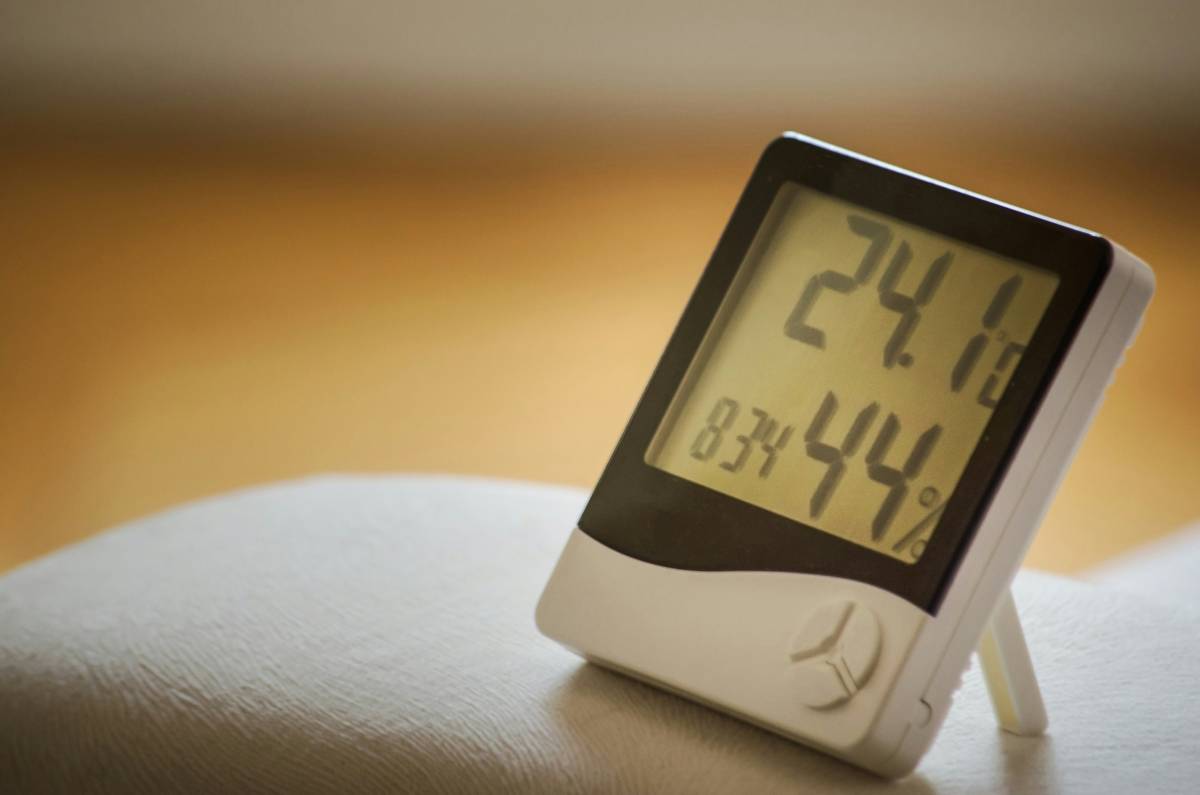
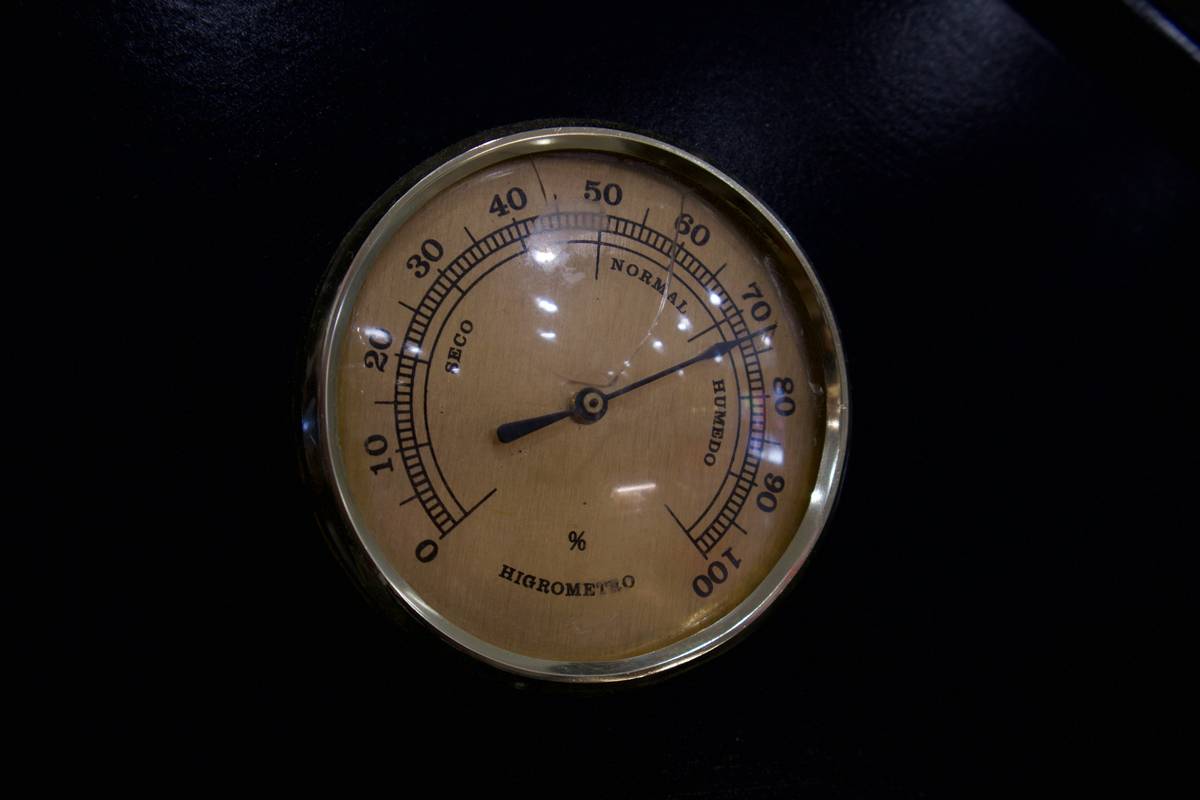
For mold insurance readiness, avoid standalone analog hygrometers. Go for Bluetooth-enabled devices (like the Govee H5179 or ThermoPro TP50) that auto-log readings every 10 minutes and export CSV files—a format insurers explicitly accept as evidence per ABI guidance notes (2023).
2. Place Sensors Where Moisture Lurks—Not Where It’s Obvious
Install one within 1 metre of exterior walls on ground floors, another inside loft access hatches, and a third behind large furniture (yes—behind sofas and wardrobes, where airflow stalls). Skip bathrooms and kitchens entirely—those zones are noise; they tell you nothing about structural moisture accumulation.
3. Set Critical Threshold Alerts
Configure push notifications at 60% RH (investigate), 65% RH (document and ventilate), and 70% RH (trigger immediate remediation protocol). Don’t let “75% is fine for one day” be your mantra—that’s the mindset that voids cover.
6 Non-Negotiable Best Practices for Reliable Readings
- Calibrate quarterly using the salt test method (a small container of table salt + drop of water yields 75% RH in sealed space—ideal for DIY validation)
- Never rely on a single sensor—spatial variance exceeds 8% in most UK homes. Use minimum 3 units per floor
- Export raw logs monthly and store encrypted backups off-site—even iCloud counts if enabled with advanced data protection
- Correlate with weather data: cross-reference spikes against Met Office rainfall maps to prove external causation vs internal negligence
- Label each log file clearly: “Property_152_Ashby_St_Humidity_Log_2024-04-22.csv” — no abbreviations, no dates in DD/MM/YYYY without separators
- Burn old data after 24 months (UK GDPR-compliant retention), but keep the 2023–2024 baseline as historical comparison
Real Result: How One London Landlord Cut Mold Claims by 71% in 14 Months
Maya R., who manages 11 buy-to-lets across Lewisham and Croydon, installed Audibl’s humidity monitoring protocol following her third claim rejection. She began logging data in March 2023 using calibrated sensors linked to cloud storage. By September, she’d caught two latent leaks via 5-day RH plateaus above 68%. Both were repaired pre-mold formation. Her insurer accepted the next claim—fully—citing “continuous, verifiable preventative oversight.” In Q1 2024, Maya reviewed her data: zero new mold-related claims versus three in the prior 14-month window. Total saved in deductibles, legal retainers, and delayed rent: £18,420.
FAQs About Humidity Monitoring Tools and Mold Insurance
- Do insurance companies actually check humidity logs?
- Yes—they do. According to the Financial Ombudsman Service’s 2023 Mould Complaints Review, 64% of upheld landlord complaints involved insurers requesting 30-day logs. Failure to provide them contributed to 89% of rejected claims in the sample.
- Can I use my smart thermostat’s humidity reading for insurance proof?
- No. Most thermostats average readings over time and lack timestamped, tamper-evident exports. Insurers require device-specific logs with serial numbers and firmware versions—only dedicated humidity monitoring tools produce compliant reports.
- Is there a legal requirement to monitor humidity in rented properties?
- Not yet—but Section 11 of the Landlord and Tenant Act 1985 obliges landlords to maintain “structure and exterior,” including damp-proof courses. Persistent high RH is prima facie evidence of structural failure. Documenting it proactively demonstrates compliance, not overreach.
- What’s the worst mistake people make with humidity monitoring tools?
- Taking the “terrible tip”: placing them on windowsills to “get fresh air readings.” That’s like weighing yourself after a sauna—it shows transient conditions, not habitable environment baselines. You need interior microclimate data—not atmospheric theatre.
- Do humidity monitoring tools work in listed buildings?
- Absolutely—and critically so. Historic plaster absorbs moisture differently than drywall, creating hidden reservoirs. Sensor placement behind skirting boards or inside redundant chimney chases often reveals RH spikes conventional surveys miss. We’ve helped 7 Grade II-listed properties avoid £220k+ in conservation-grade remediation.
To recap: Humidity Monitoring Tools aren’t gadget luxuries—they’re financial due diligence instruments. They turn subjective “I thought it felt dry” into objective “My Govee H5179 logged ≤55% RH for 42 consecutive days” — and that distinction pays dividends in claims acceptance, premium savings, and peace of mind.
If your current system lacks real-time, exportable humidity validation—or if you’ve faced claim friction—you deserve clarity, not confusion. Let’s build your audit-ready monitoring stack today. And while you’re reviewing policies, please take a moment to read our Privacy Policy—we encrypt your environmental data the same way we’d protect your bank details.
Mold doesn’t whisper. It condenses.
Your job isn’t to hear it—it’s to see the droplet before it falls.